About The Book

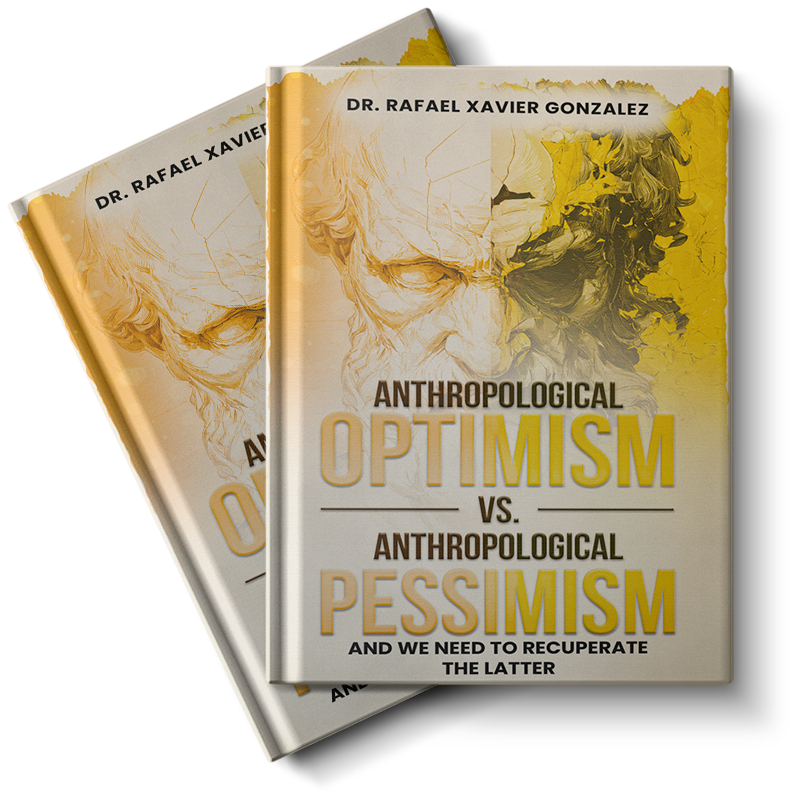
Anthropological Optimism vs. Anthropological Pessimism: And We Need To Recuperate the Latter

By Dr. Rafael Xavier Gonzalez

Why this book

Anthropological Optimism vs. Anthropological Pessimism: And We Need To Recuperate the Latter

This book argues that our age suffers from Erroneous Anthropological Optimism (EAO)—a near-utopian trust in human goodness that forgets sin, dulls conscience, and breeds social and ecclesial confusion. To heal the imbalance, Dr. Rafael Xavier Gonzalez proposes a return to Sound Anthropological Pessimism (SAP): a lucid acknowledgment of human brokenness that actually safeguards Sound Anthropological Optimism (SAO)—the unshakable hope grounded in God’s goodness and Christ’s redemption.

Across six parts and twenty-three chapters, Gonzalez blends theology, philosophy, and psychology: from Pelagius, Leibniz, Rousseau, Luther, Schopenhauer, and Sartre, to questions of modern gnosticism, transhumanism, and cultural therapeutics. He contrasts pessimistic and optimistic strands in Augustine, Bonaventure, Aquinas, the Carmelite tradition (St. John of the Cross), and Jesuit approaches to inculturation and freedom; then turns pastoral, urging renewed preaching on sin, judgment, penance, and mortification as the practical path to hope. The goal isn’t bleakness, but balance: a clear-eyed realism about man that makes room for authentic joy in God.
What’s inside

Part I – Preliminary Questions: value theory, metaphysical optimism vs. pessimism, and why hope requires realism.

Part II – Erroneous Anthropological Optimism: Pelagius; Leibniz and scientific optimism; Rousseau; modern currents in Church and culture.

Part III – Sound Anthropological Optimism: Aquinas on the passions and virtue; Jesuit inculturation and human freedom; theology from “lived experience.”

Part IV – Erroneous Anthropological Pessimism: Luther, Schopenhauer, Sartre; gnosticism and its modern fruits.

Part V – Sound Anthropological Pessimism: Augustine, Bonaventure, and the “pessimistic” ascent of Mount Carmel with St. John of the Cross.

Part VI – Conclusion: laxity vs. rigidity; eschatological optimism; penance and mortification as remedy.

Ideal for

Clergy and theologians; catechists; Catholic educators; lay readers seeking a bracing yet hopeful anthropology; anyone wrestling with the Church’s response to modern optimism and nihilism.

True Catholic Doctrinal Development: The Modal Distinction of Francisco Suárez and its Christological-Theological Consequences

by Dr. Rafael Xavier Gonzalez

In this book, Dr. Rafael Gonzalez discusses Suárez’ modal distinction, which seems to satisfy both medieval Thomism (and neo-Thomism) and the newer pejoratively called “la nouvelle théologie” in their views of the distinction between nature and supernature, philosophy and theology. In other words, the traditional Scholastic theology and the more contemporary Ressourcement theology are synthesized by Suárezian modes, which emerges from the synthesis that is Christ himself.