by Dr. Rafael Xavier Gonzalez
Any serious Catholic must know and live the message of Our Lady of Fatima (1917). Strictly speaking, private revelations are not absolutely necessary and hence they do not command the assent of faith, like public revelation does, which ended with the death of the last Apostle, St. John. Nevertheless, private revelations are relatively necessary since they essentially deal with how to live out the public revelation in a certain point of history. There are also levels of importance applied to the apparitions which stem from the transcendence of the message for man, as opposed to a mere private revelation to an individual or individuals with no public consequences. Regarding this, Fatima ranks on top!
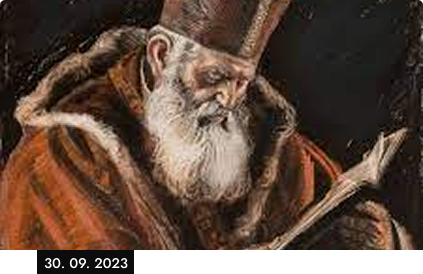
Recently I was reading about the life of Pope Saint Martin I (649-655), the last martyred Pope. It came to me that this Pope, like all the Saints, is very relevant for Catholics today especially for the Papacy. More specifically, while reading about his situation in the 7th century, I thought about the Fatima prophecy of a future martyred Pope, which the three shepherd children, the seers, actually saw, as part of the third secret of Fatima: “…a bishop dressed in white… we had the impression it was the Holy Father… killed by a group of soldiers who fired bullets and arrows at him…”.
The virtue that is most necessary for a Pope is fortitude, and the good Popes in the history of the Church have exercised it. For any Pope to be martyred he had to display fortitude, especially by being unwavering in the Faith. For a martyred Pope this would usually mean to stand against some political or ideological power that in turn killed him. It is important to have enemies and the right ones! It is a bad sign if we have no enemies, especially when we are in a position of power, like the Papacy. Of course it is also not good to have the wrong enemies, when the good are against you. I forgot who once said that a man is known by what enemies he has.
Pope Martin I had the right enemies. He refused to compromise under Byzantine imperial pressure by accepting the heresy of Monothelitism, that Christ had one will. Pope Honorius before fell into a compromise though he did not fall into the actual error of affirming one sole will in Christ. His ambiguous words (no doubt imprudent) seemed to affirm the existence of a moral unified will in Christ, which is not compatible with Him having actual two wills according each nature, Divine and human. Pope Honorius defended that Christ had one will in the sense that His human will was totally conformed with the His Divine will, a unity that could not be broken.
Essentially it would seem that after much strife with Pope Leo the Great, the Monophysites and the great Council of Chalcedon (431), a little harmony and good-will was called for, similar to the mentality behind the convocation of the Second Vatican Council. So Christ has two natures unified in the one Divine Person, according to defined dogma, all fine and good. But for the sake of unity in Christ and in the Church, to not totally marginalize the Monophysite zeal against Nestorianism, wouldn´t it be orthodox to claim that Christ has a certain monoenergism, that is, one energy or will, while maintaining the two-fold nature in Christ? Can’t we just dispel the friction between Chalcedonians and Monophysites once and for all by meeting somewhere in the middle somehow?
Sometimes we cannot harmonize truly contradictory views, no matter how well intentioned we may be, and here is where Pope Martin thrived. Both Constans II (641-668) and the Patriarch Paul II of Constantinople tried to impose a solution to the problem in an edict called the Typos (Rule), which forbade any further discussion of the question of one or two Divine will or activities. These rulers tried to suppress the whole question.[1]
When Pope Martin was elected in 649, he totally opposed the ordinances of the Emperor and Patriarch. The response of Pope Martin was monumental. He worked independently as Pope and convoked the local council of Lateran, not to be confused with the ecumenical council of Lateran I (1123), which would actually be the first ecumenical council in the West.
In this local council, the Typos and the Ekthesis (a prior imperial decree which actually forbade the belief in the two will of Christ) were condemned, attaching an anathema sit on Monothelitism: “If anyone… does not confess, in accord with the Holy Fathers, that there are two natural wills and two natural operations… let him be anathema.” Heretics were condemned and the Papal authority was upheld.
Pope Martin’s transcendent actions paved the way and prepared for the great ecumenical council of Constantinople III (681), which upheld the orthodox belief in two will in Christ, and condemned Monothelitism, thanks to the contributions of Martin’s successor Pope Agatho (678-681). The council fathers even yelled, “Many years to Agatho, Pope of Rome!”.
What happened to Pope Martin? He was arrested by the Byzantines in the Lateran while celebrating the Mass on a bogus charge of treason. Another fabricated charge was that he was aiding the Muslims, charges denied by Pope Martin. On the way to Constantinople, he was prevented from showering for 40 days! He was humiliated and arriving at Constantinople, was publicly flogged and sentenced to death but ended up being exiled and dying short after. This all reminds me of St. Peter’s words in Scripture: “…if you suffer for doing good and you endure it, this is commendable before God.To this you were called, because Christ suffered for you, leaving you an example, that you should follow in his steps”.[2]
St. Martin himself felt that what happened to him was a sign of what was going to come in the future for the Church, as he expressed in a letter written during his trial period. He believed that he was suffering what the future Pope would suffer right before the coming of the Antichrist.[3]
Forward to the Fatima prophecy. There’s an intimate link between the Pope in the vision and Pope Saint Martin I. But when would that be and who and what will cause the martyrdom of that foretold Pope? We do know that the future Pope will die among the ruins of a devasted world, something that St. Martin foretold and saw in his own sufferings.
What is clear in this connection is that both Popes suffer and die as witnesses to the Truth, Christ himself, not as mere strong leaders, but as a sacrificial pastors in imitation of He who they love, giving a tremendous example to their flock. They both stand against a corrupt world, whose prince is the devil, who seek to destroy God by getting back at His Church, especially the leader of this Divine Institution, the Pope. Both St. Martin’s life and the future Fatima Pope will give a direct proof that the papacy is a role imbued with the suffering, the Cross of Christ. For Christ cannot be truly sought and found without the Cross. And how much more does the maxim apply to the one who actually represents Jesus Our Lord, the Vicar of Christ himself?
In the end let’s pray for all our Popes, remembering that the times are coming in which we will explicitly have to choose between eternal life or eternal death, Heaven or hell. This ultimatum though is definitely somehow present in our very lives, even before the last trial (CCC #675).
[1] Cf.: See Roger Collins, Keepers of the Keys of Heaven, ch. 6.
[2] 1 Peter 2, 21-22.
[3] Keepers of the Keys of Heaven, ch. 6. The authors cites a work in Italian pertaining to St. Martin’s letter.
